

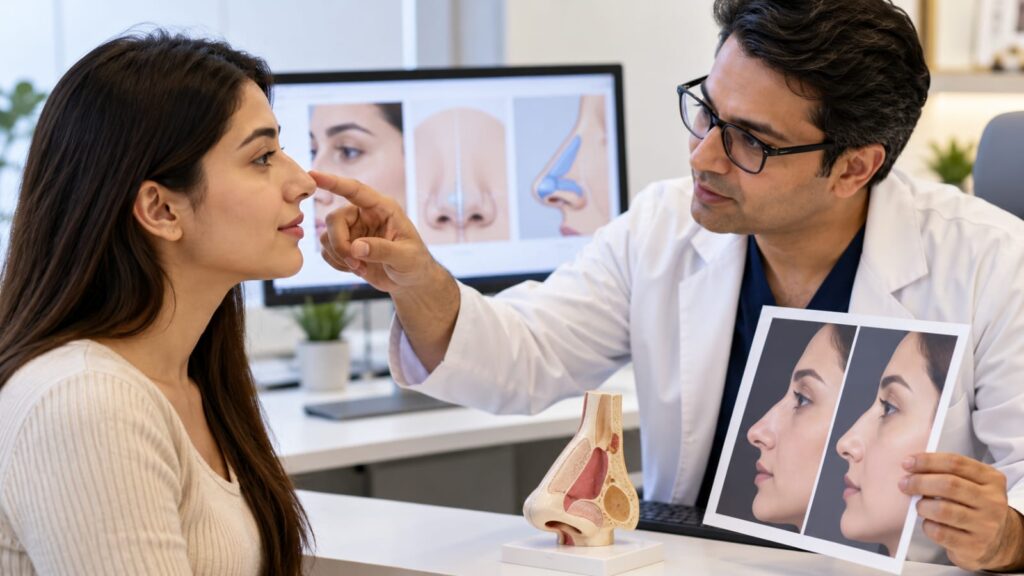
Rhinoplasty, commonly known as nose reshaping surgery, is a procedure that changes the shape, size or proportions of the nose. People may consider this surgery to address concerns about their nose’s appearance or to correct certain structural problems that affect breathing.
Understanding the procedure, recovery process and possible risks can help patients make informed decisions. Consulting a qualified plastic surgeon is an important step in understanding the available options.
What Is Rhinoplasty?
Rhinoplasty is a surgical procedure used to reshape the nose by modifying its bone, cartilage or other structures. The treatment plan depends on the patient’s facial anatomy, medical needs and desired outcome.
The goal is to achieve an appropriate balance between the nose and other facial features while considering nasal function. Every patient has different requirements, so the surgical approach is planned individually.
Why Do People Consider Rhinoplasty?
People may consider rhinoplasty for several reasons, including:
– A prominent hump on the nasal bridge.
– A broad or asymmetrical nose.
– Concerns about the shape or position of the nasal tip.
– Changes in the nose following an injury.
– Selected structural problems that affect nasal breathing.
Not everyone needs surgery. A medical assessment helps determine whether rhinoplasty is suitable and whether other treatment options should be considered.
Who May Be Suitable for Rhinoplasty?
Rhinoplasty may be considered by individuals whose facial growth is complete, who are in appropriate health for surgery and who have realistic expectations.
During consultation, the surgeon may review medical history, previous nasal procedures, breathing difficulties and current medications. Patients should clearly communicate their concerns and understand the possible outcomes and limitations before deciding on surgery.
How Is Rhinoplasty Performed?
Rhinoplasty is performed under anaesthesia in an appropriate surgical facility. Depending on the patient’s anatomy and treatment goals, the surgeon may use an open or closed surgical approach.
The procedure may involve reshaping bone or cartilage to address specific concerns. When breathing problems are present, additional evaluation may be required to determine whether functional correction is appropriate.
The exact technique and surgical plan vary from patient to patient.
Recovery After Rhinoplasty Surgery
After surgery, patients may experience temporary swelling, bruising, congestion or discomfort. Initial recovery generally takes several weeks, although swelling can take months to settle completely.
Following postoperative instructions is essential. Patients should attend follow-up appointments, protect the nose from accidental injury and resume physical activities only when advised by their surgeon.
Final results vary depending on individual healing, nasal anatomy and the procedure performed.
Risks and Important Considerations
Like other surgical procedures, rhinoplasty carries potential risks, including bleeding, infection, persistent swelling, asymmetry, changes in sensation, breathing difficulties and dissatisfaction with the outcome.
Patients should discuss these risks, expected recovery and possible alternatives with their surgeon before proceeding. No surgical result can be guaranteed.
Rhinoplasty Consultation with Dr. Sumit Saxena in Pune
Dr. Sumit Saxena has qualifications in general surgery and Burns & Plastic Surgery. Patients considering nose reshaping can consult him to discuss their concerns and understand whether rhinoplasty may be appropriate for their individual needs.
If you are searching for a rhinoplasty surgeon in Pune, choose a consultation that prioritises medical assessment, patient safety, realistic expectations and personalised treatment planning.
Book a Consultation
Considering rhinoplasty surgery? Consult Dr. Sumit Saxena in Pune to discuss your concerns, understand the procedure and explore suitable treatment options based on your individual assessment.